

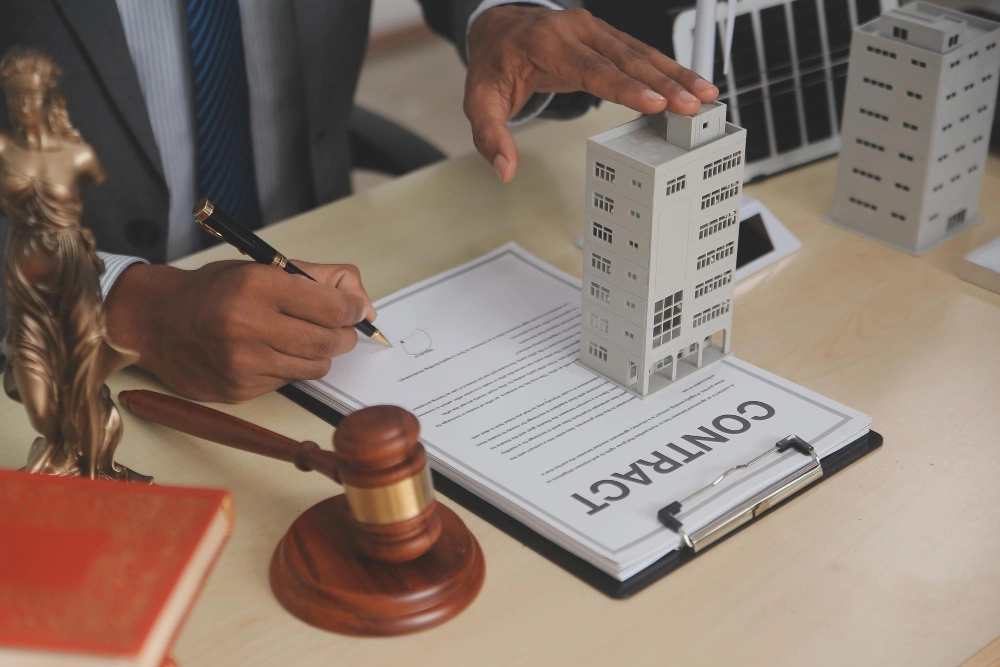
Quick answer: A builder buyer agreement is the RERA “agreement for sale” that fixes your price, carpet area, possession date and exit rights. Under Section 13 of RERA, the builder cannot take more than 10% of the cost before you sign and register it. Courts strike down one-sided clauses, so check every term before you sign.
Your builder buyer agreement decides almost every right you hold in a new flat. It fixes the price, the payment plan, the possession date and what happens if either side defaults. Yet many buyers in Noida, Gurugram and Delhi sign it in a hurry. This guide explains what the law requires, which clauses to check and how courts treat unfair terms.
What Is a Builder Buyer Agreement Under RERA?
The Real Estate (Regulation and Development) Act, 2016 calls this document an “agreement for sale”. Section 13(1) bars a promoter from taking more than 10% of the cost as an advance or application fee unless it first signs a written agreement and registers it. Section 13(2) then requires the agreement to follow the format in the State rules.
In practice, each State notifies a model agreement. The builder may add project-specific terms, but it cannot dilute the buyer’s statutory rights. UP RERA and Haryana RERA have both publicly warned builders against demanding more than 10% before registration. Delhi follows the same Section 13 rule through its own RERA rules.
Builder Buyer Agreement Checklist: 7 Clauses to Check
Before you sign, read these clauses line by line:
- Carpet area and specifications: The agreement must state the carpet area, not just a “super area”. Attach the approved plans.
- Possession date: Look for a fixed date. Treat open-ended grace periods with caution.
- Delay interest: Section 18 entitles you to interest for every month of delay. The rate should match the rate the builder charges you for late payment.
- Payment plan: Link instalments to construction stages, not to calendar dates alone.
- Cancellation and forfeiture: Check how much earnest money the builder can keep if you exit.
- Changes to plans: Under Section 14(2), the builder needs the consent of two-thirds of allottees for major changes.
- Defect liability: Section 14(3) makes the builder fix structural defects reported within five years of possession.
Key Case Law on One-Sided Clauses
Pioneer Urban Land and Infrastructure Ltd v. Govindan Raghavan (Supreme Court, 2019): The Court held that one-sided clauses in an apartment buyer’s agreement amount to an unfair trade practice. Therefore, a buyer is not bound by them.
Ireo Grace Realtech Pvt Ltd v. Abhishek Khanna (Supreme Court, 2021): A three-judge bench repeated this view. It also held that RERA does not stop buyers from approaching consumer commissions. Notably, the Consumer Protection Act, 2019 now expressly lets higher commissions declare unfair contract terms void.
Godrej Projects Development Ltd v. Anil Karlekar (Supreme Court, February 2025): The builder had forfeited 20% of the price after a Gurugram buyer cancelled. The Court called the agreement one-sided and upheld the NCDRC order that capped forfeiture at 10% of the basic sale price. We discuss the refund maths in our guide on flat booking cancellation refunds.
Separately, in the Ashwini Kumar Upadhyay PIL, the Supreme Court in July 2024 indicated that States should adopt a uniform model agreement. However, buyers should still check their own State’s notified format.
How to Challenge an Unfair Builder Buyer Agreement
If you have already signed, you still have options. First, send a written objection to the builder. Next, file a complaint before the State RERA authority or the consumer commission. Both forums can refuse to enforce an unfair term. For complex disputes, real estate dispute lawyers in Delhi NCR can review the agreement and choose the right forum.
FAQs on Builder Buyer Agreements
What is a builder buyer agreement?
It is the agreement for sale between a developer and a flat buyer. It records the price, area, payment plan, possession date and remedies for default.
Is registration of a builder buyer agreement mandatory?
Yes. Section 13 of RERA requires a registered agreement before the builder takes more than 10% of the cost.
How much can a builder take before signing the agreement?
A builder can take no more than 10% of the flat cost as an advance or booking amount.
Can a builder enforce one-sided clauses?
Generally, no. The Supreme Court treats one-sided terms as an unfair trade practice, and RERA authorities and consumer commissions can refuse to enforce them.
What is the difference between a builder buyer agreement and a sale deed?
The agreement is a promise to sell a flat in the future. The sale deed, signed at possession, actually transfers ownership to you.
Can the builder change the layout after I sign?
Not freely. Major changes to sanctioned plans need the written consent of two-thirds of the allottees under Section 14(2).
Lex Pleaders advises homebuyers, investors, banks and NBFCs on builder buyer agreements, RERA complaints and real estate disputes as a law firm in Delhi NCR. Write to us at lexpleadersindia@gmail.com to discuss your matter.
Disclaimer: This article offers general information only and does not constitute legal advice.