

Trademark registration in India, and what happens when a mark is contested
Trademark registration in India is the straightforward part. A mark’s value is decided later — when an examination report raises an objection, when a third party opposes, or when someone else starts using the mark. Lex Pleaders India (OPC) Private Limited prepares and prosecutes applications before the Trade Marks Registry. Moreover, the firm acts at the contested stages, and in infringement and passing-off litigation before the commercial courts and High Courts.
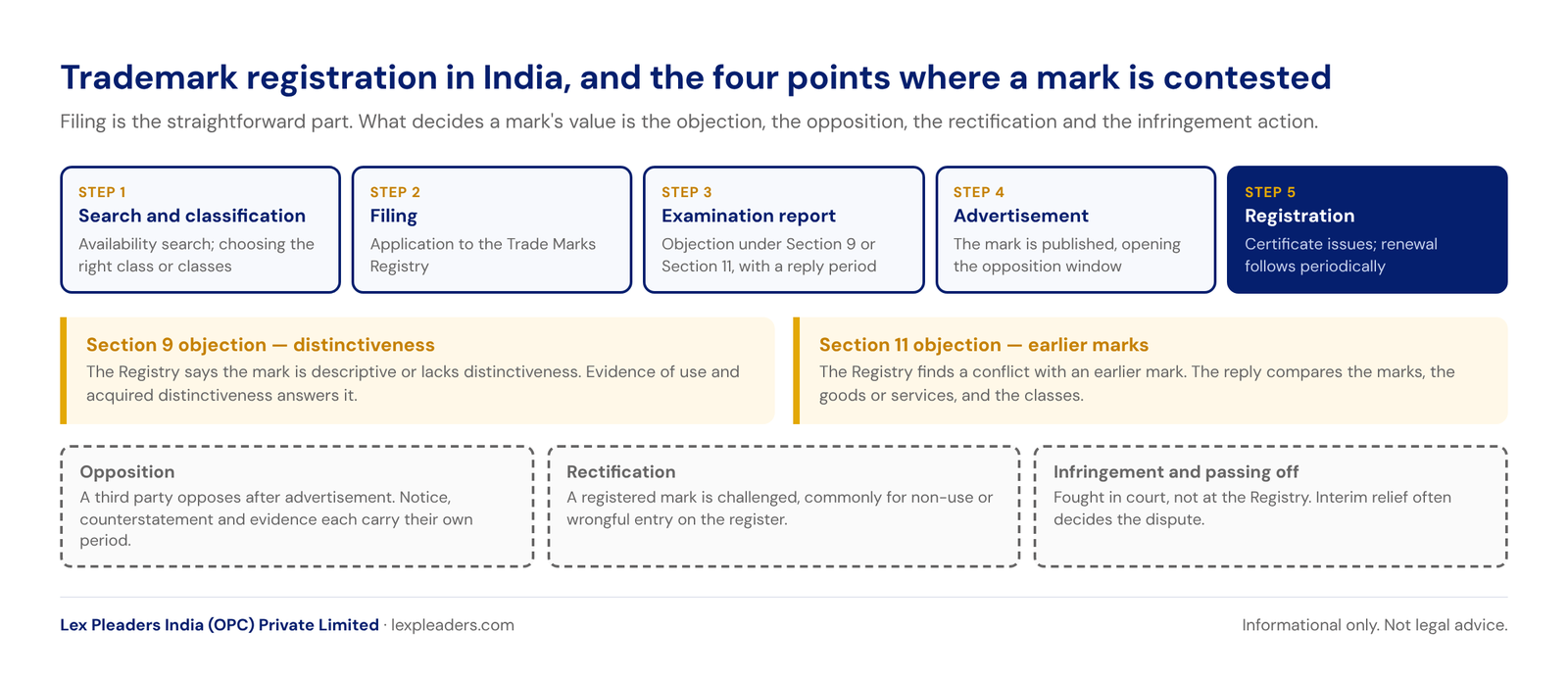
How trademark registration in India works
The process runs in a set order. First, an availability search and the choice of class. Then the application itself. Next, the Registry examines the mark and may issue an examination report. If the Registry accepts the reply, it advertises the mark, which opens the opposition window. Finally, if nobody opposes, the mark proceeds to registration, and renewal follows periodically. You can search existing marks yourself on the Registry’s public trademark search, and the Office of the Controller General of Patents, Designs and Trade Marks publishes the forms, fees and cause lists.
Our intellectual property practice
The firm files and prosecutes applications. However, it is built for what follows — the objection, the opposition, the rectification and the injunction. Those matters turn on evidence of use, on distinctiveness, and on a careful comparison of competing marks. That is where the firm concentrates its effort.
Key areas of trademark and IP work
- Trademark prosecution — availability searches, classification, filing, and replies to examination reports raising objections under Section 9 on descriptiveness and distinctiveness, or Section 11 on conflict with earlier marks.
- Hearings before the Registry — show-cause hearings where the Registry does not accept a reply, and the evidence of acquired distinctiveness that supports them.
- Opposition and rectification — filing and defending oppositions, counterstatements and evidence; and rectification or cancellation of registered marks.
- Infringement and passing off — interim injunctions, suits before the commercial courts, and action against deceptively similar marks, trade dress and domain names.
- Copyright — registration, questions of ownership and assignment, and infringement proceedings.
- Patents and designs — filing and prosecution support, and advice on the commercial routes available once a dispute arises.
- Commercial IP — assignment and licensing, confidentiality and non-disclosure terms, and the enforceability of restrictive covenants.
Deadlines decide outcomes
Trademark procedure is unforgiving about time. An examination report carries a reply period. Opposition and counterstatement carry their own. Evidence stages run to prescribed timelines. Therefore a missed step can cost the application or the registration outright, and restoration is not always available. The firm dockets those dates on instruction, then works backwards from them.
Who we act for
The firm acts for businesses protecting a brand they are building. In addition, it acts for applicants whose marks have met an objection or an opposition. It also acts for registered proprietors enforcing against infringers, and for defendants answering claims of infringement or passing off.
Why clients instruct Lex Pleaders on IP
Contested work, not volume filing
The firm’s strength is the objection, the opposition and the injunction, where evidence and argument decide the outcome rather than form-filling.
Litigation capability behind the Registry work
Where a Registry matter becomes a court matter, the same firm conducts it, including applications for interim injunctive relief.
Commercially framed advice
Clients hear when a mark is worth fighting for, and when a coexistence arrangement or a modified mark answers the commercial problem better.
Partner-led and Supreme Court based
Partners conduct matters directly, with a chamber at the Supreme Court of India for appellate work.
Frequently asked questions
How long does trademark registration in India take?
It depends on whether the Registry raises an objection, and on whether anyone opposes the mark after advertisement. An unopposed application moves considerably faster than a contested one.
What does a trademark objection mean?
An examination report is not a refusal. It raises an objection — commonly that the mark is descriptive or lacks distinctiveness under Section 9, or that it conflicts with an earlier mark under Section 11 — and invites a reply within the prescribed period.
What happens if the Registry does not accept my reply?
The matter then proceeds to a hearing, where you can argue the application and file supporting evidence.
Can a registered trademark be cancelled?
Yes. Rectification and cancellation proceedings run on grounds including non-use and wrongful entry on the register.
Do I need registration to sue?
No, not for passing off, which depends on goodwill and use. However, registration adds the statutory infringement remedy, which is usually easier to establish.
How quickly can an injunction be obtained?
You can seek interim relief at the outset of a suit. Whether the court grants it depends on the strength of the mark, the evidence of use and the balance of convenience.
Speak to the IP team
For how a mark is contested at each stage, see our guide to trademark disputes in India.
The firm’s practice covers trademark prosecution, opposition and enforcement. Contact details are on the contact page, and our notes sit under intellectual property rights.
This page is for information only. It is not legal advice and does not create a lawyer–client relationship. Statutory timelines change, so confirm the position for a particular application or mark.